CN
CN

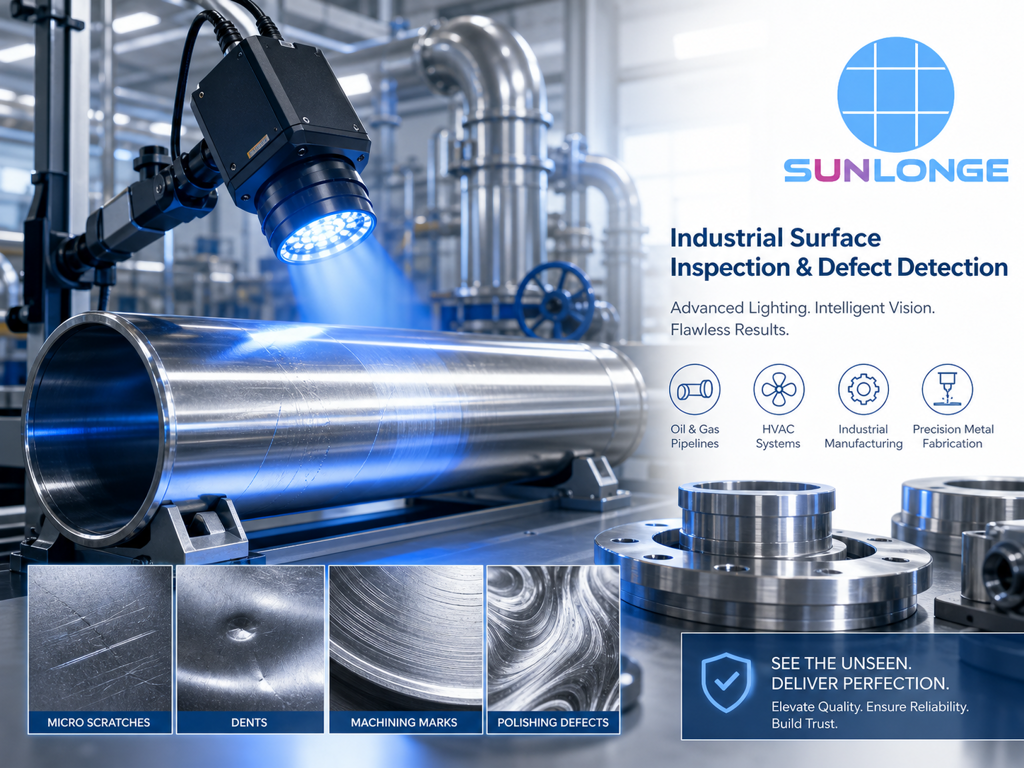
In industries where component integrity is non-negotiable—such as oil & gas pipelines, HVAC systems, industrial manufacturing, and precision metal fabrication—even microscopic scratches, dents, machining marks, or polishing defects on stainless steel, aluminum, and other metals can initiate corrosion, compromise structural strength, or lead to premature failure. Detecting these surface imperfections early is critical, yet conventional lighting often fails to reveal fine defects on reflective or polished metal surfaces.
This is where surface defect inspection lights—specialized high-intensity LED lamps with optimized wavelengths and beam characteristics—transform inspection processes. These tools dramatically enhance contrast, making invisible or barely visible flaws stand out clearly to the human eye or machine vision systems.
Sunlonge International Co., Limited, a Hong Kong-based manufacturer with factories in mainland China and over 25 years of expertise in UV NDT lighting and fluorescent inspection solutions, has developed advanced surface defect inspection lights (including the SL8500 series and higher-lux SL8600/SL8900 models) that set new standards for precision, reliability, and cost-efficiency.
Understanding Surface Defects on Metal Components

Metal surfaces in critical applications are subjected to machining, forming, welding, polishing, handling, and environmental exposure. Common defects include:
- Fine scratches and gouges: Often caused by handling, assembly, or abrasive contact; they act as stress concentrators and corrosion initiation sites.
- Dents and deformations: Impact damage that alters surface geometry and can hide under coatings.
- Machining marks and tool chatter: Residual patterns from milling, turning, or grinding that affect fatigue life and sealing performance.
- Polishing defects: Swirls, haze, or micro-abrasions on stainless steel or aluminum that compromise aesthetics, hygiene (in food/pharma), or coating adhesion.
On highly reflective metals like stainless steel and aluminum, these defects are particularly difficult to detect under standard workshop lighting because light reflects uniformly, masking micro-irregularities. In oil & gas pipelines and pressure vessels, undetected scratches can evolve into leaks or catastrophic failures. In HVAC components and industrial machinery, they reduce efficiency and lifespan.
Industry data shows that the Cost of Poor Quality (COPQ) in manufacturing typically ranges from 5–25% of sales, with escaped defects multiplying costs dramatically (the 1-10-100 rule: $1 to fix at inspection, $10 in assembly, $100+ once in the field, plus reputational damage). In oil & gas, pipeline surface defects contribute significantly to corrosion-related failures, one of the leading causes of downtime and environmental incidents.
Limitations of Traditional Inspection Methods
Standard white light inspection, even with high-wattage lamps, often falls short on polished or reflective metals:
- Glare and reflection: Uniform illumination creates specular reflections that hide fine scratches.
- Low contrast: Machining marks and shallow dents blend into the background.
- Inconsistent results: Operator fatigue, varying ambient light, and lamp degradation lead to missed defects (industry studies show conventional methods detect <40% of typical surface defects in a single pass).
- Time-consuming: Inspectors must use multiple angles, magnifiers, or supplementary techniques, slowing production.
- High maintenance: Older mercury-vapor or halogen lamps have short lifespans, require warm-up time, and pose environmental/safety concerns.
These limitations result in higher scrap rates, rework, warranty claims, and—most critically—in-field failures in safety-sensitive applications like pipelines and pressure equipment.
The Science Behind Specialized Surface Defect Inspection Lights
Surface defect inspection lights overcome these challenges through precise control of light characteristics:
- Wavelength Optimization Different wavelengths interact uniquely with metal surfaces.
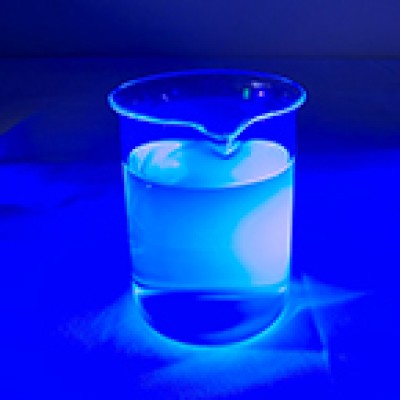
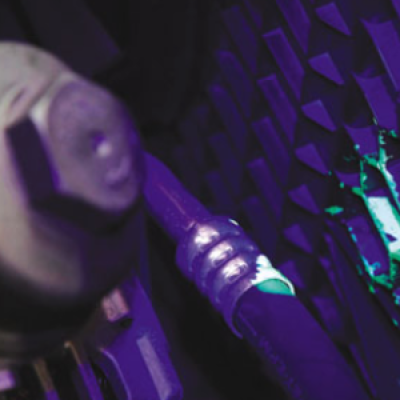
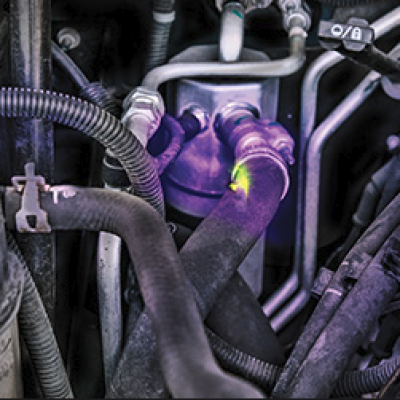
- 365nm UV-A light: Excites fluorescent penetrants (in Liquid Penetrant Inspection/PT or FPI) that seep into scratches and cracks, glowing brightly under UV to reveal defects invisible under white light. It also enhances visibility of certain contaminants and micro-cracks through fluorescence or absorption differences.
- Yellow-green light (510-600nm): Highly sensitive to the human eye; provides excellent contrast for surface texture, scratches, and dust on metals without eye strain.
- Cool white light (6000K): Ideal for direct visual inspection of scratches, dents, and polishing marks on reflective surfaces when combined with proper beam control.
- Extremely High Intensity (Lux) High illuminance (hundreds of thousands of lux) overwhelms ambient light and creates strong highlights and shadows on micro-irregularities. Fine scratches scatter or absorb light differently, appearing as dark lines or bright highlights against the metal background.
- Beam Quality and Angle Control Custom optics produce parallel or focused beams. Oblique or cross-lighting techniques (darkfield illumination) make scratches stand out dramatically as the light reflects differently off defect edges versus flat surfaces.
- Stability and Adjustability Infinite dimming and adjustable irradiation areas allow inspectors to optimize for part geometry and defect type in real time.
Research and field data confirm that optimized UV and high-intensity specialized lighting can allow operators to detect up to 70% of typical surface defects in a single scan, compared to less than 40% with conventional methods. UV configurations particularly excel when combined with fluorescent techniques for critical metal components.
Why Sunlonge’s Surface Defect Inspection Lights Are Superior
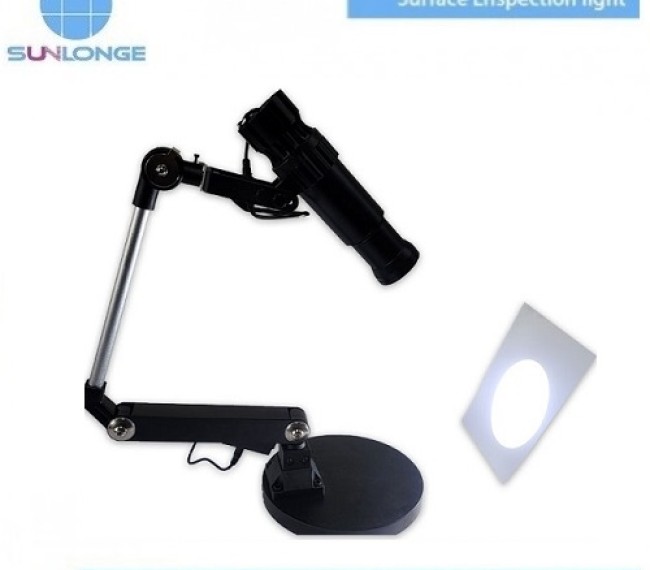
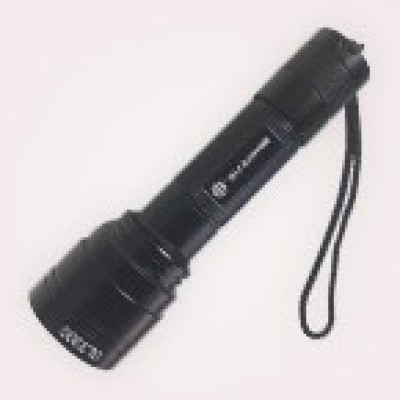
Sunlonge’s SL series (including SL8500 with 365nm option, and higher-output SL8600/SL8900 models) represent the pinnacle of surface defect inspection lighting technology, specifically engineered for demanding industrial environments.
Key Technical Advantages:
- Unmatched Brightness: Up to 210,000 lux at 30cm (SL8500) and models reaching 300,000–400,000 lux—far exceeding many competing LED and legacy lamps. This extreme intensity reveals scratches and defects down to 1μm on stainless steel, aluminum, and other metals.
- True 365nm UV + Multi-Wavelength Options: Genuine 365nm UV for fluorescent penetrant inspection and enhanced micro-crack detection, plus optimized white and yellow-green spectra for direct visual scratch detection. Custom optical lenses and filters deliver stable, high-contrast output.
- LED Technology Superiority: 25W imported high-power LED with 30,000-hour average lifespan (10x longer than traditional mercury-vapor lamps), >90% illuminance stability, instant-on, no warm-up, lower energy consumption, and zero mercury. Mechanical cooling ensures consistent performance during 24/7 operation.
- Precision Optics & Adjustability: Infinite 0–100% dimming, adjustable irradiated area (Φ120-160mm at typical working distances), and proprietary parallel light technology for optimal defect highlighting without hotspots or glare.
- Compact, Robust Design: Lightweight (around 0.53kg for SL8500), portable yet powerful enough for production lines or field inspection in oil & gas and pipeline maintenance.
Certifications & Compliance: Sunlonge UV NDT lamps, including models in the inspection series, comply with rigorous standards such as ASTM E3022 for LED UV-A lamps used in nondestructive testing. This ensures consistent wavelength, intensity, and performance required for professional NDT applications—giving users confidence in audit and regulatory environments.
Proven Use Cases Across Target Industries:
- Oil & Gas & Pipeline Maintenance: High-intensity UV and specialized visible light reveal surface scratches, gouges, and weld imperfections on pipes, valves, and pressure vessels that could initiate corrosion or leaks. Technicians report significantly improved detection of fine discontinuities.
- HVAC Systems: Inspection of metal ducts, coils, and components for machining marks or handling scratches that affect sealing, coating performance, or airflow efficiency.
- Industrial Manufacturing: Precision inspection of stainless steel and aluminum parts for scratches and polishing defects before coating, assembly, or shipment—reducing downstream failures.
- Semiconductor & Precision Components (transferable expertise): Proven ability to detect sub-1μm defects on highly reflective surfaces demonstrates capability for the most demanding metal inspection tasks.
Cost and Operational Benefits: Sunlonge lights deliver substantial total cost of ownership advantages—often cited in the range of significant savings through extended lifespan, reduced maintenance/replacement frequency, lower energy use, and elimination of expensive complex optical systems or frequent mercury lamp changes. Their high detection accuracy minimizes escaped defects, directly lowering COPQ. The ability to perform direct visual inspection with human eyes (aided by superior lighting) often replaces or augments costly automated vision systems while maintaining or improving quality.
Compared to generic high-lux lamps or older mercury systems, Sunlonge products offer better beam control, wavelength precision, long-term stability, standards compliance, and application-specific customization—translating to higher first-pass yield, faster inspections, and greater reliability in safety-critical sectors.
Quantifiable Benefits and Supporting Statistics
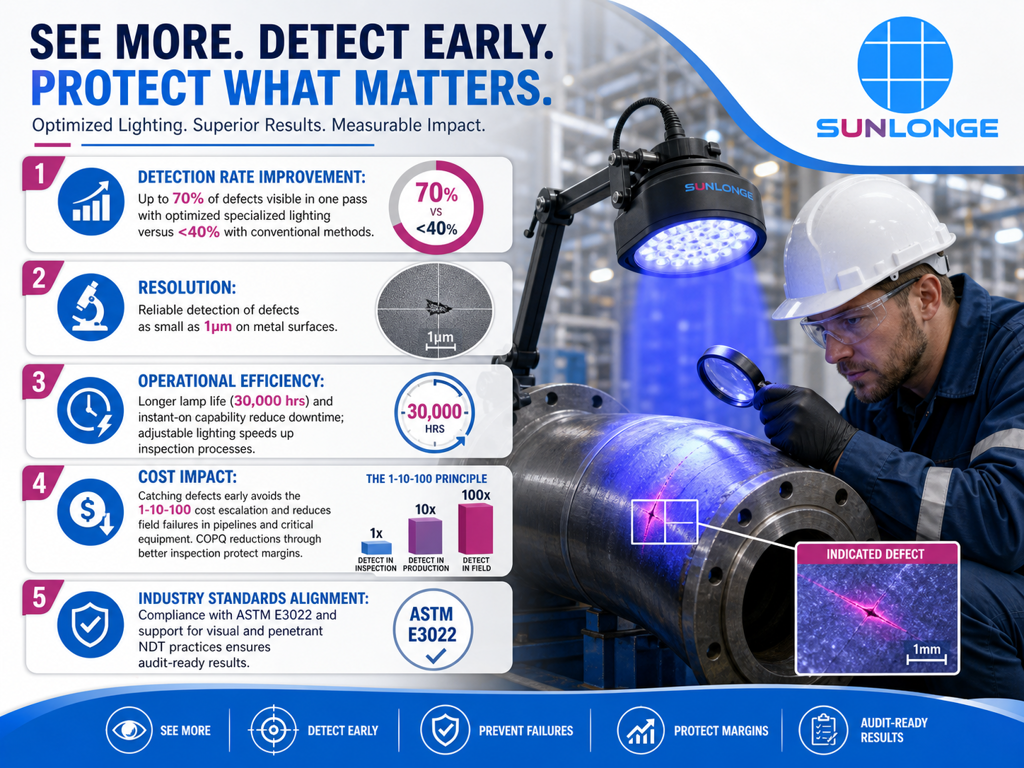
- Detection Rate Improvement: Up to 70% of defects visible in one pass with optimized specialized lighting versus <40% with conventional methods.
- Resolution: Reliable detection of defects as small as 1μm on metal surfaces.
- Operational Efficiency: Longer lamp life (30,000 hrs) and instant-on capability reduce downtime; adjustable lighting speeds up inspection processes.
- Cost Impact: By catching defects early, companies avoid the 1-10-100 cost escalation and reduce field failures in pipelines and critical equipment. In high-complexity manufacturing, COPQ reductions through better inspection directly protect margins.
- Industry Standards Alignment: Compliance with ASTM E3022 and support for established NDT practices (visual, penetrant) ensures audit-ready results.
Comparison Table: Lighting Technologies for Metal Surface Defect Inspection
| Aspect | Conventional White Light / Halogen | Generic LED Inspection Lamps | Sunlonge SL Series Surface Defect Inspection Lights |
| Peak Intensity | Low to moderate | Moderate (often <100k lux) | Extremely High (210k–400k+ lux) |
| Wavelength Options | Broad white only | Limited | True 365nm UV + White + Yellow-Green optimized |
| Defect Detection (Fine Scratches) | Poor on reflective metals | Good | Excellent (down to 1μm, enhanced contrast) |
| Fluorescent Penetrant Support | None or poor | Limited | Excellent (ASTM E3022 compliant UV) |
| Lifespan & Stability | Short, degrades quickly | Good | 30,000 hrs, >90% stability |
| Adjustability | Limited | Basic | Infinite dimming + adjustable beam area |
| Total Cost of Ownership | High (replacements, downtime) | Moderate | Low (long life, energy efficient, high yield) |
| Standards Compliance | Variable | Variable | ASTM E3022 and NDT-ready |
| Best For | General lighting | Basic inspection | Precision metal scratch/dent detection in critical industries |
Key Specifications of Sunlonge SL Series Surface Defect Inspection Lights
| Model/Series | Max Illuminance (at 30cm) | Wavelength Options | Key Features | Primary Applications |
| SL8500 | 210,000 lux | 365nm UV, White, Yellow-Green | 25W LED, infinite dimming, compact | Wafer/semicon to industrial metal inspection |
| SL8600 | 300,000 lux | Multi (incl. 365nm) | High stability, custom optics | Precision surface defect detection |
| SL8900 | 400,000 lux | Multi (incl. 365nm) | Maximum intensity for demanding tasks | Critical NDT and metal component inspection |
Q&A: Common Questions About Surface Defect Inspection Lights
Q1: What makes surface defect inspection lights different from regular workshop lighting for detecting scratches on metal? A: Regular lighting creates glare on reflective metals and lacks the intensity, wavelength specificity, and beam control needed to highlight micro-irregularities. Specialized lights use optimized spectra (including 365nm UV), extreme brightness (hundreds of thousands of lux), and adjustable optics to create high contrast, revealing scratches, dents, and machining marks that would otherwise be invisible.
Q2: How does 365nm UV light help in scratch and defect detection on stainless steel or aluminum? A: 365nm UV excites fluorescent penetrants that flow into surface defects, making even hairline scratches glow brightly. It also provides enhanced contrast for certain surface anomalies through differential absorption and fluorescence, which is why it is a cornerstone of professional NDT practices.
Q3: Can Sunlonge lights really detect defects as small as 1μm? A: Yes. Sunlonge’s high-intensity LED systems with custom optics are proven to reveal particles and scratches in the 1μm range on highly reflective surfaces, as demonstrated in precision semiconductor and industrial applications.
Q4: Why is ASTM E3022 compliance important when choosing a surface defect inspection light? A: ASTM E3022 sets strict performance requirements for UV-A LED lamps used in nondestructive testing. Compliance guarantees consistent wavelength, intensity, and reliability—essential for repeatable, auditable inspection results in oil & gas, manufacturing, and regulated industries.
Q5: How do Sunlonge lights deliver cost savings compared to traditional or competitor solutions? A: They offer dramatically longer lifespan (30,000 hours), higher energy efficiency, superior stability (reducing re-inspections), and the ability to replace more expensive automated systems or frequent lamp replacements. Users also benefit from higher first-pass detection rates, lowering overall Cost of Poor Quality.
Q6: Are these lights suitable for both production line and field inspection in pipelines or HVAC? A: Absolutely. Sunlonge’s portable, robust designs with long battery/AC options and high output are ideal for both controlled manufacturing environments and demanding field conditions in oil & gas pipeline maintenance and HVAC system inspections.
Q7: How should companies choose between white/yellow-green light and UV for metal scratch detection? A: White or yellow-green light excels for direct visual inspection of surface texture and scratches on metals. 365nm UV is preferred when using fluorescent penetrants or when maximum sensitivity to micro-cracks and hidden defects is required. Many Sunlonge models offer both capabilities.
Conclusion: Invest in Superior Inspection to Protect Quality and Reputation
In today’s competitive and safety-conscious industrial landscape, relying on inadequate lighting for surface defect detection on metal components is a costly risk. Surface defect inspection lights from Sunlonge International Co., Limited deliver the intensity, wavelength precision, reliability, and standards compliance needed to reveal fine scratches, dents, machining marks, and polishing defects on stainless steel, aluminum, and other critical metals with unmatched clarity and efficiency.
With proven performance in precision industries, ASTM E3022 compliance, exceptional brightness, and significant total cost of ownership advantages, Sunlonge lights help manufacturers and maintenance teams in oil & gas, HVAC, and industrial sectors achieve higher quality, faster inspections, and lower failure rates.
Ready to upgrade your surface inspection capabilities? Visit http://www.sunlonge.com or contact Sunlonge directly to learn more about the SL series surface defect inspection lights and request a demonstration tailored to your metal components and industry requirements.
Sunlonge International Co., Limited – Precision Lighting for Critical Inspection. http://www.sunlonge.com/product/1516.html (SL8500 Series)